Judgment in the Shadows: Reading Blackout by Ahmed Moustafa ElZoghby
Cineairo ○ 25 November 2025
Blackout is a film about how jealousy, prejudice and fear spreads faster than truth, and how a single hallway can turn into a charged arena of judgment. On the eve of Eid, in a Cairo apartment building trying to hold onto normalcy, director Ahmed Moustafa ElZoghby reveals what happens when suspicion becomes a communal language and how quickly a woman’s choices can become everyone’s concern but her own.
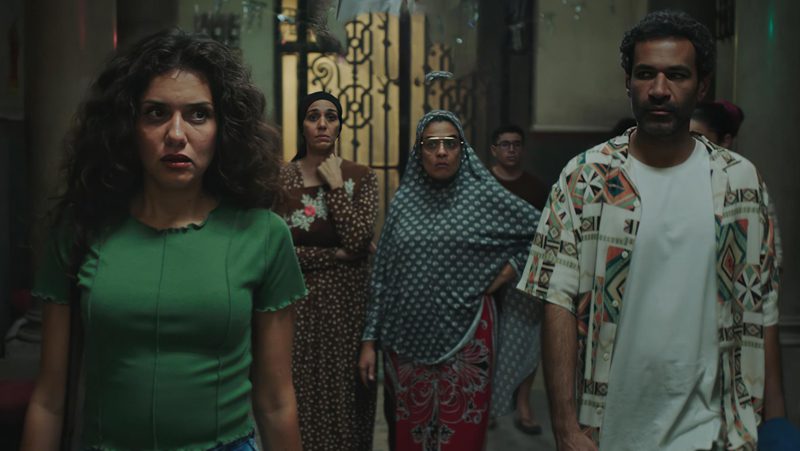
The film begins quietly: a grandfather collapses, the men rush out to find a doctor, and the building sinks into a waiting stillness. But when a young woman returns home late with a man by her side, the silence fractures. Suddenly, every door becomes an ear, every shadow a warning. The women left behind mothers, sisters, grandmothers begin constructing narratives faster than facts can form. What starts as worry mutates into something sharper: moral scrutiny, whispered verdicts, inherited fear resurfacing under dim light.
ElZoghby doesn’t treat the blackout as a thematic decoration; he uses it as an emotional landscape. In the half-darkness, judgment grows teeth. Faces appear in slivers of light, bodies freeze in doorframes, and the building’s narrow corridors pulse with unspoken accusations. The absence of electricity becomes the perfect metaphor for what’s happening people groping in the dark for answers, and instead finding each other’s worst assumptions.
The ensemble cast creates a symphony of quiet tension. Yara Goubran, Jihan El Shamashergy, Malek Emad, Sedky Sakhr, and Shaimaa Farouk embody the generational anxiety that sits heavy over the building. And the Violence, a different type of violence and it is absorbing more than anyone realizes.
What the film exposes, without ever preaching it, is how easily a community polices a woman how her privacy becomes communal property, how fear disguises itself as concern, how tradition breathes down the hallway like a cold draft. It asks why suspicion feels like safety to so many, and why silence is more readily believed than truth.
By the final moments, Blackout leaves you sitting with the uncomfortable understanding that nothing overtly “bad” needs to happen for genuine harm to unfold. This is a story of ordinary people, ordinary fear, and the extraordinary damage that can bloom in the shadows between them.
Blackout doesn’t end with clarity it ends with the echo of a question we’re left to confront ourselves: What happens to a society when judgment becomes instinct and compassion becomes optional?